

Australia: The Ancient Continent Beneath the Southern Stars
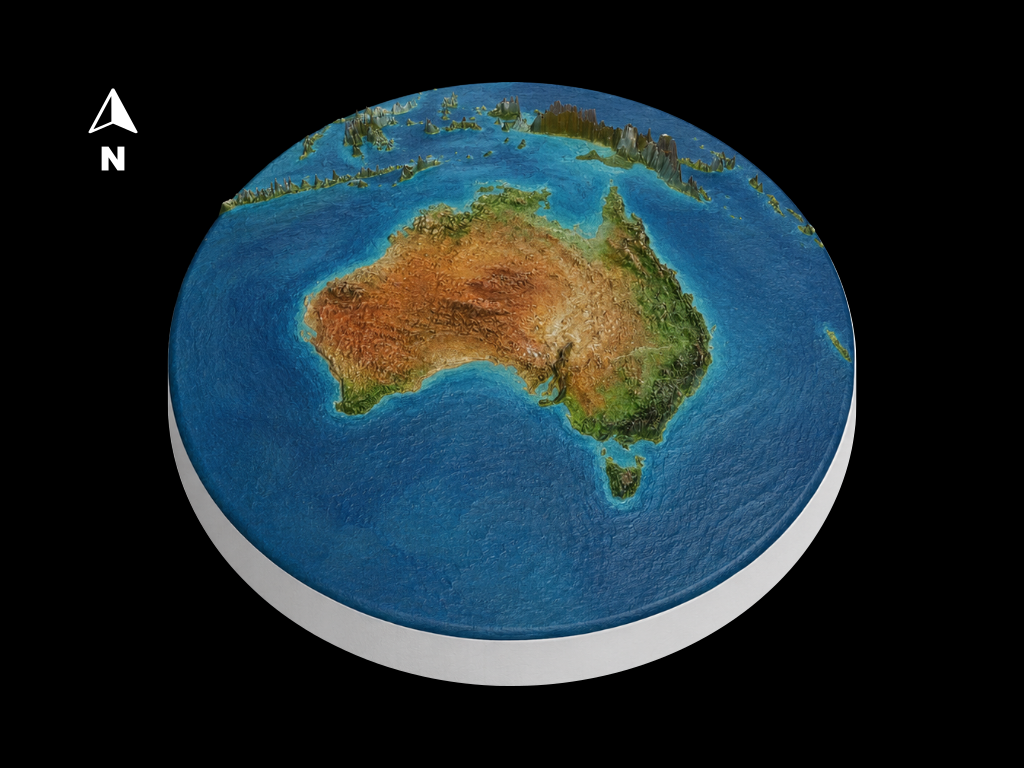
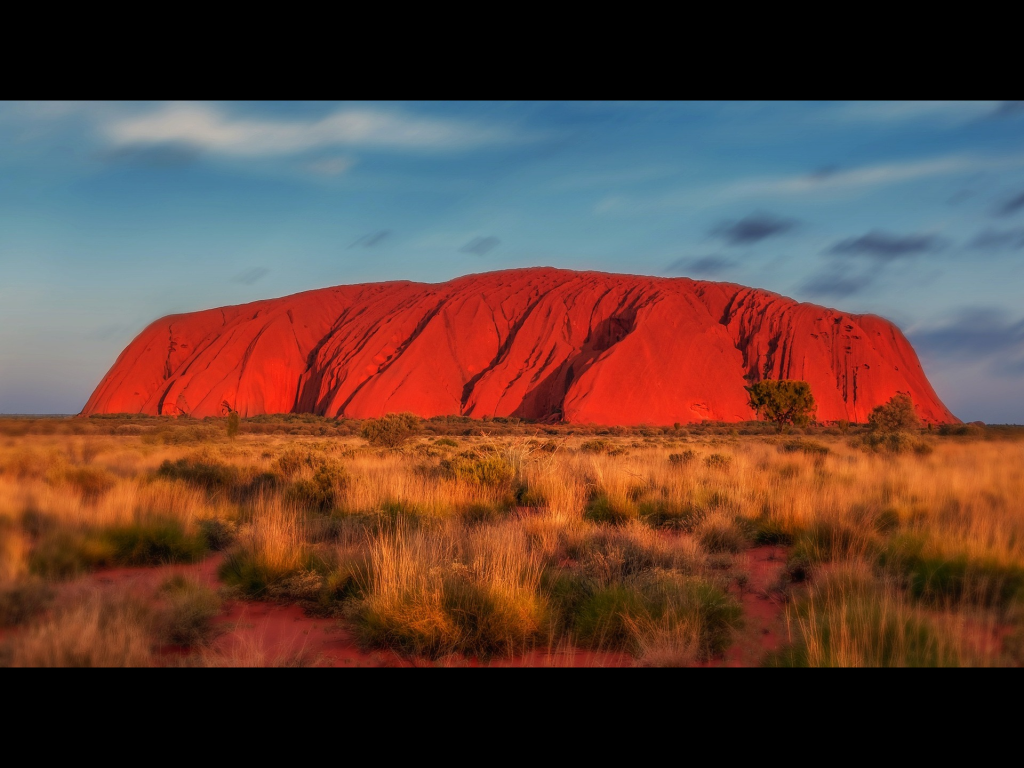
Australia rises from the southern seas like a world unto itself, immense, ancient, and alive with extraordinary contrasts. As the sixth largest country on Earth, it stretches from arid deserts and tropical rainforests to vast coastlines and the Great Barrier Reef, creating one of the planet's most remarkable natural landscapes. Long before European arrival, Aboriginal peoples had inhabited the continent for tens of thousands of years, developing diverse societies, hundreds of languages, and one of humanity's oldest continuous cultural traditions. British colonisation began in 1788 and transformed the continent through settlement and expansion, while bringing dispossession, disease, violence, and profound upheaval to Indigenous communities. The colonies united in 1901 to form the Commonwealth of Australia, beginning the evolution of a modern parliamentary democracy that eventually achieved full legislative independence from Britain. Today, Australia is a highly urbanised and prosperous nation whose identity has been shaped by Indigenous heritage, British and Irish influences, and generations of multicultural immigration from across the world. With abundant natural resources, strong institutions, a developed economy, and an influential role in global affairs, Australia stands as both an ancient land and a modern power, carrying the weight of a complex past while continually redefining its place in the world.
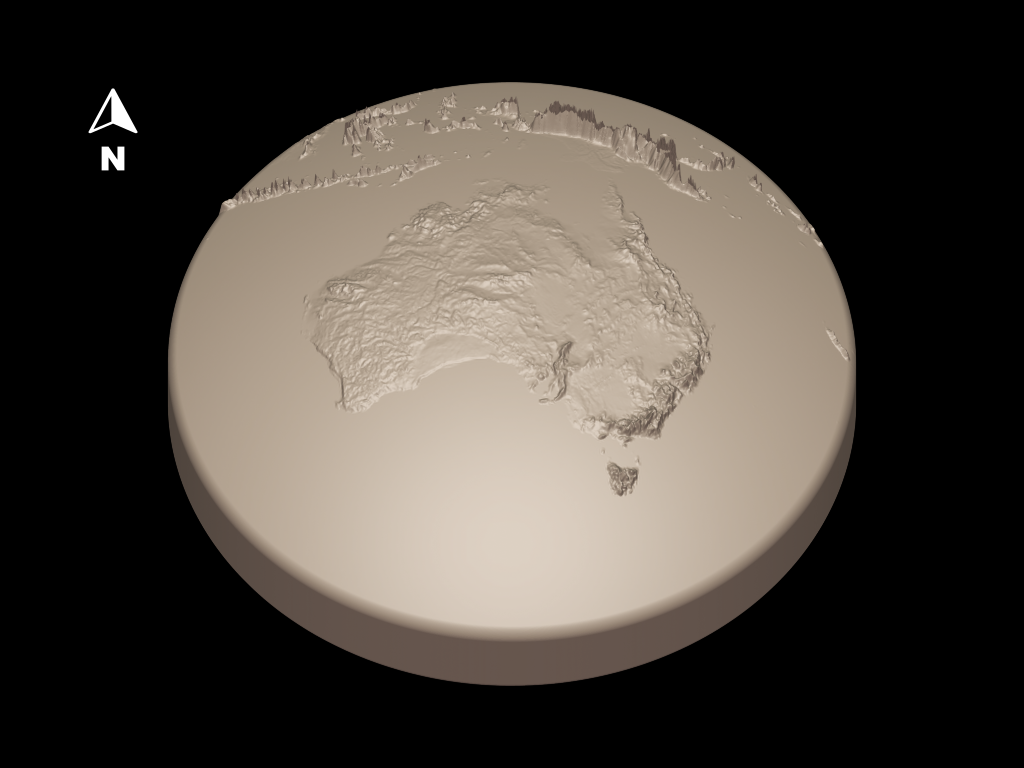
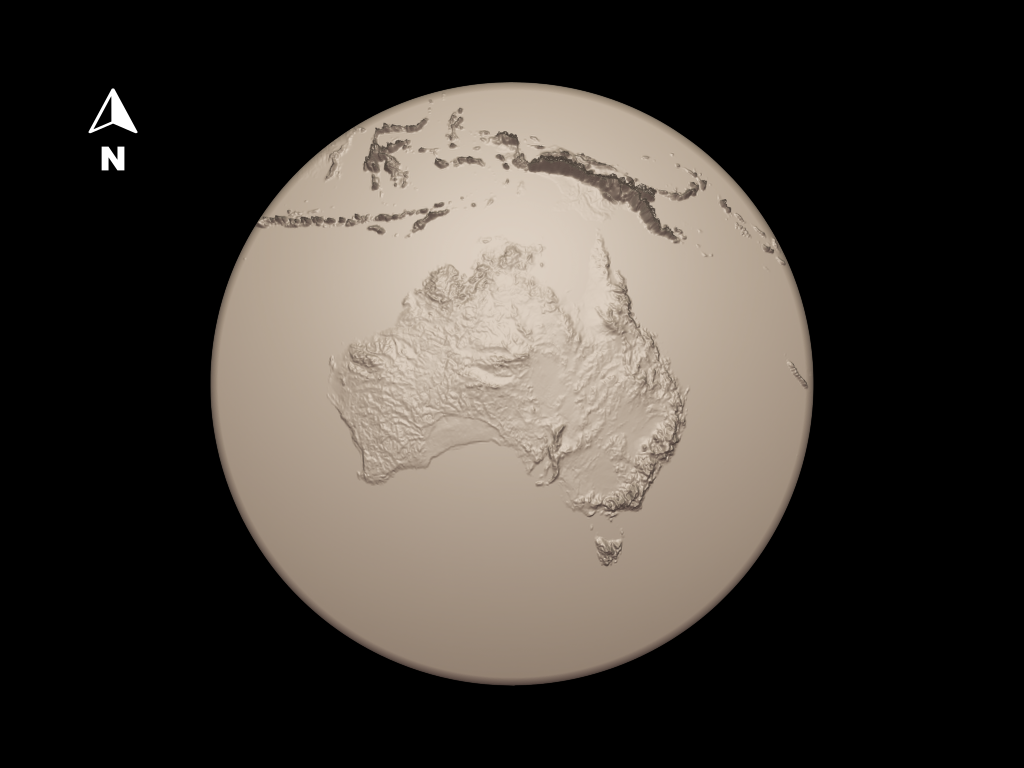
AUSTRALIA
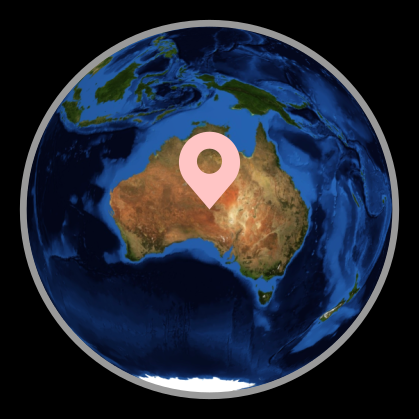
- Location: 26.7543° S, 133.2488° E
- Region: Australia, Oceania
- Scale: 1:36,868,113
- Vertical Exaggeration: 100.0x
- Model Diameter: 180 mm
- Model Height: 50 mm
- DEM: USGS/GMTED2010_FULL
Links
The Throne of Europe: Where Earth Meets the Heavens
Towering above Europe like a frozen giant, Mont Blanc commands awe with both its beauty and its danger. Rising over 4,800 meters on the border of France and Italy, it stands as the highest peak in Western Europe and a magnet for climbers, adventurers, and dreamers. Its icy summit shifts in height over time due to snow and climate changes, revealing a mountain that is alive and constantly evolving. Despite its popularity, the ascent is far from easy, demanding endurance, skill, and respect for sudden weather changes and deadly hazards. The mountain has shaped history, from the birth of modern mountaineering in 1786 to ongoing disputes over its summit ownership. Beneath its surface lies a dramatic geological story of granite formations and glacial forces that carved its striking landscape. Today, Mont Blanc remains both a symbol of natural grandeur and a warning, as climate change accelerates melting glaciers and increases risks for those drawn to its legendary slopes.